Shade Plants for Every Garden Type – ShadeAndGreen
The ultimate guide to shade plants for every garden type
Choosing shade plants gets much easier once you match them to the kind of shade you actually have. This guide covers reliable options for borders, dry shade, damp spots, containers, and small home gardens, with practical tips on placement, spacing, and care.
The Ultimate Guide to Shade Plants for Every Garden Type
A shady garden can be one of the most pleasant parts of a yard, but it is also where people make some of their most frustrating planting mistakes. A bed under mature trees may look cool and protected, then dry out faster than expected. A porch container that never gets direct sun can stay damp for days longer than a sunny pot. Good shade plants help, but the real trick is matching them to the kind of shade you actually have.
That matters more than many beginners expect. “Shade” can mean dry roots under a maple, rich damp soil beside a fence, bright morning light on the east side of the house, or deep cover near a wall that gets very little sun at all. Once you sort that out, plant choices get much easier and the garden usually starts looking more settled.
This guide is built for real home spaces: front borders, side yards, patios, porch pots, foundation beds, and those awkward shady corners that never seem to come together. The goal is simple: choose plants that fit the site, understand what they need, and avoid the common mistakes that make shade gardening harder than it needs to be.
What most gardeners need to know before buying shade plants
The biggest mistake is treating all low-light spots the same. Light level matters, but so do moisture, root competition, air flow, and how much reflected heat the space gets from walls or pavement.
A few quick examples:
Dry shade is common under large trees and along foundations with roof overhangs.
Moist shade often shows up where soil stays cool and richer in organic matter.
Bright shade may get morning sun or filtered light through tree canopies.
Deep shade gets very little direct light and usually needs foliage plants more than bloom-heavy ones.
It also helps to think about what job the plant needs to do. Are you filling the front edge of a bed, covering bare soil under shrubs, softening a path, planting a container, or building a layered woodland-style border? A hosta that looks great in a nursery pot may be far too large for the front of a narrow walkway bed, while a small heuchera can disappear if it is placed behind bigger foliage.
In my experience, most disappointing shade plantings come down to one of two things: the plant was too dry for too long, or it was the right plant in the wrong amount of space. Both problems are easier to avoid than to fix later.
Best shade plants for classic garden beds
If you are planting a shaded border or foundation bed, it helps to start with reliable, easy-to-place plants that offer a mix of leaf size, height, and season.
Hostas
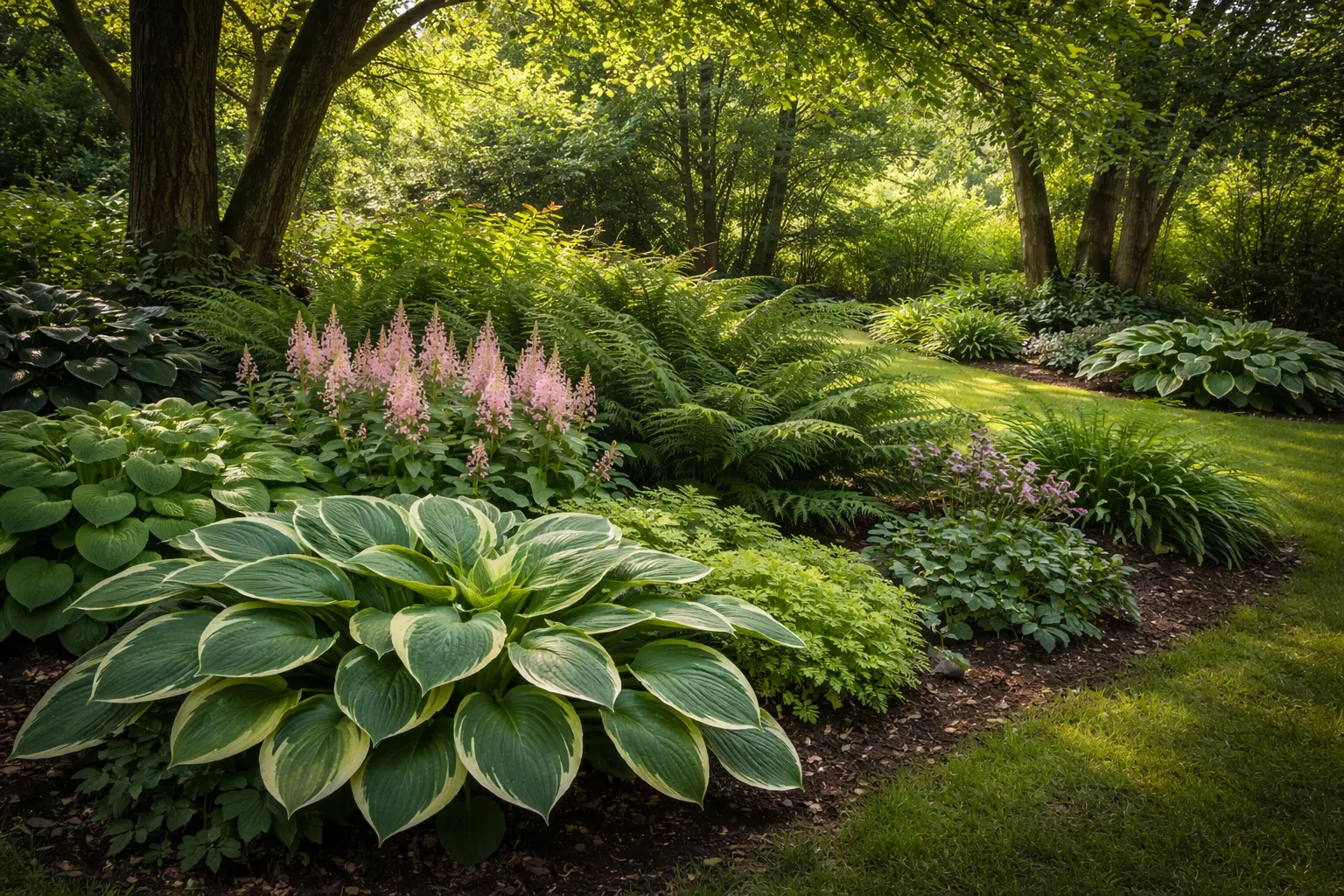
Hostas are still some of the most useful foliage plants for part shade and full shade. They come in sizes from small edging types around 8 inches tall to large varieties that can spread 4 or 5 feet wide. Blue-leaved types such as ‘Halcyon’ often hold color best in deeper shade, while gold forms like ‘Sum and Substance’ can brighten bright shade if the soil does not dry out too much.
Their biggest downside is slug damage, especially on thinner leaves. If slugs are a regular problem in your garden, thicker-leaved varieties usually look better through the season.
Heuchera
Heuchera, often called coral bells, is helpful for adding smaller mounds of color near the front of the bed. Many forms stay around 10 to 18 inches tall, with leaves in burgundy, caramel, lime, silver, or deep green. They do best in soil that drains well, and in hot climates they usually look better with protection from strong afternoon sun.
Ferns
Ferns bring movement and softness that broad-leaved plants cannot. Japanese painted fern is a good choice for refined texture and silver-green color, while autumn fern adds warmer tones and fresh coppery new growth in spring. Most ferns prefer moisture-retentive soil, so they may struggle in dry shade unless the soil is improved.
Astilbe
Astilbe is useful when you want actual flower plumes in a shady border. It usually blooms in early to midsummer, with feathery flowers in pink, white, or red above mounds of divided leaves. It likes steady moisture, and it is one of the first plants to look unhappy if the soil dries too much.
Hellebores
Hellebores are especially valuable for late winter to early spring bloom. Their leathery evergreen leaves help hold the bed together when little else is happening. One thing worth knowing before you place them: hellebore flowers often face downward, so they look best slightly above path level or on a gentle slope where you can actually see them.
Best plants for dry shade under trees
Dry shade is where many gardeners get discouraged, because it looks like a gentle planting spot but behaves more like a competitive root zone. Tree roots pull moisture quickly, and that affects even dependable shade plants.
A few of the better options include:
Epimedium: a very useful ground-layer plant with wiry spring flowers and tidy leaves; many types stay around 8 to 18 inches tall and slowly spread into a low patch.
Hellebores: good for dryish shade once established, especially if the soil has been improved first; most form clumps around 18 inches tall and wide.
Japanese forest grass: best in brighter shade and not bone-dry soil, but lovely where moisture is at least moderate; it usually mounds to about 12 to 18 inches.
Carex: several sedge types handle shade well and give a grassy texture without the fuss of a lawn grass; many stay in the 12- to 24-inch range.
Pulmonaria: best with some moisture, but useful in bright dry shade where it is not pushed too hard; its spotted leaves help after the spring flowers fade.
I have seen many people lose hostas under maples and assume hostas are overrated, when the real issue was root competition. Tree roots can steal moisture so fast that the plants never get a fair start.
If you are planting under trees, improve the soil with compost, water deeply while plants establish, and avoid packing plants too tightly. Crowding makes the area harder to water well and harder to monitor.
Best shade plants for damp or moisture-retentive spots
Some shady beds stay cooler and damper, especially in older gardens with rich soil or areas that do not bake in summer. In those spots, you can grow plants that would struggle badly in dry shade.
Astilbe
Astilbe is one of the first plants to consider for moist shade. Most types grow 1.5 to 3 feet tall depending on variety, and they pair well with hostas and ferns because the flower plumes break up large masses of foliage. They usually bloom from early to midsummer, and the leaves can brown at the edges quickly if the soil dries out.
Ligularia
Ligularia has bold leaves and yellow flower spikes or daisies, depending on the type. It can be dramatic in the right spot, but it is not forgiving about drought. If the soil dries out, the leaves can wilt quickly and look rough. Give it a place out of hot afternoon sun and enough room, since some kinds can spread 2 to 3 feet wide.
Rodgersia
Rodgersia is a bigger, coarser-textured plant for roomy gardens. It has large leaves and plumes of flowers, and it suits the kind of shady bed that stays evenly moist through summer. It is more of a backdrop plant than a front-of-border choice, since established clumps can reach 3 to 5 feet tall and wide.
Ferns
Many ferns are at their best in this kind of soil. Lady fern, ostrich fern, and Japanese painted fern can all be effective, though ostrich fern spreads and needs room. In a narrow bed, that spreading habit can turn from helpful to messy pretty quickly.
Shade plants that work well in small gardens and containers
Small spaces need a little more restraint. Large foliage can be beautiful, but it can also swallow a porch bed or make a container look clumsy if proportions are off.
Good choices for compact gardens or pots include:
Heuchera
Small hostas such as ‘Blue Mouse Ears’
Begonias for seasonal color in containers
Caladiums in warm weather for bright leaf color
Coleus in bright shade containers
Carex for a grassy texture at the edge of pots
Container soil behaves differently from garden soil. In my garden, shade containers dry much slower than most people expect, especially early in the season. That means overwatering is often a bigger problem than underwatering on porches and covered patios.
Use pots with drainage holes and avoid packing too many plants into one container. A simple mix of one small focal plant, one filler, and one trailing edge plant usually looks better than a crowded pot of five or six things fighting for space. Small hostas often work best in wider, low pots instead of deep narrow ones, while begonias and coleus give quicker color in seasonal porch containers.
Best shade plants by garden type
Garden type
Good plant choices
Why they work
Dry shade under trees
Epimedium, hellebores, carex
Better able to cope with root competition and lower moisture
Moist shady border
Astilbe, ferns, ligularia
Thrive in cooler soil with steady moisture
Front edge of a shady bed
Heuchera, small hostas, carex
Compact size and clear shape
Large woodland-style bed
Hostas, ferns, rodgersia
Strong leaf contrast and layered structure
Porch pots or patio containers
Heuchera, coleus, begonias
Good color and scale for smaller spaces
How to build a shade garden that looks balanced
A good shade border usually depends more on leaf contrast than flower color. That is why so many successful plantings mix broad leaves, fine texture, upright forms, and lower mounding plants rather than relying on bloom alone.
A simple layout often works best:
Put taller or broader plants toward the back or center of the bed
Repeat one or two reliable plants so the border feels connected
Use smaller mounding plants at the front edge
Mix at least two different textures so the planting does not go flat
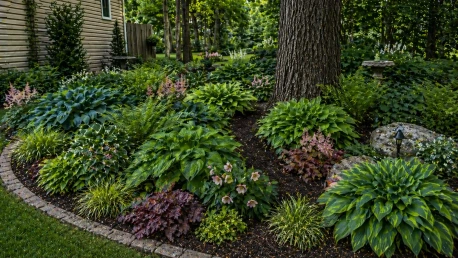
For example, you might pair a medium blue hosta with Japanese painted fern and burgundy heuchera. Or you could combine hellebores, epimedium, and carex for a quieter planting under deciduous trees.
It also helps to plan for what disappears. Bleeding heart is a beautiful spring plant, but it often goes dormant in summer, so it needs neighbors that can fill the space later. A hosta or fern placed nearby can solve that problem before it starts.
Care tips that matter more in shade than people think
Shade gardens are often described as low-maintenance, but they still need observation. The work is lighter in some ways, though not completely absent.
The most useful habits are:
Water deeply during establishment, especially under trees
Mulch to slow moisture loss, but keep mulch away from crowns
Divide overgrown plants when they crowd paths or neighboring plants
Clean up collapsed hosta foliage after frost
Watch for slugs, especially in spring
Do not assume shade means permanently moist soil. A bed can look cool and still be dry a few inches down. It is worth checking by hand before watering and before deciding a plant “just does not like the spot.”
Common mistakes with shade plants
One common mistake is planting for flowers alone in deep shade. Many flowering plants will survive there, but the display is usually weaker and the plants can stretch. Foliage tends to do more of the real work.
Another mistake is choosing plants that mature at completely different scales without planning for it. A small heuchera tucked beside a giant hosta may look balanced in spring and buried by midsummer.
People also plant too close to tree trunks or against dry foundations, then wonder why nothing fills in. Those are challenging sites, and they usually need soil improvement, mulch, and a more patient plant choice.
If you enjoy this kind of practical plant-matching approach, ShadeAndGreen.com is a good place to explore more ideas for low-light planting and home garden design.
Conclusion
The best shade plants are the ones that suit the shade you actually have. Match them to moisture, root competition, and available space, and the whole process gets much easier. Start with a few dependable plants, give them the conditions they need, and a shady part of the yard can become one of the most satisfying places to grow.
Shady spots are easier to plant once you understand the light, moisture, and root competition in the area. These 20 plant picks cover real garden situations, from dry shade under trees to porch containers, damp borders, and small low-light spaces.
Hostas are one of the easiest ways to fill a shady bed, but variety choice, spacing, and moisture matter more than many beginners expect. This guide covers dependable hostas, practical placement, and care tips that help them look full and healthy over time.