Best Hostas for Shade Gardens: Varieties, Spacing & Care
A lot of shady beds start the same way: bare soil under a tree, a strip along the north side of the house, or a corner where bright annuals always look tired by July. That is where hostas for shade gardens make life easier. They fill space fast enough to matter, they give the bed some weight, and they can make a difficult patch look settled instead of patchy.
Still, hostas are not one-size-fits-all plants. Some stay neat at the front of the bed, some spread into broad clumps, and some sulk if the soil dries out under thirsty tree roots. A good planting starts with choosing the right variety, then giving it enough room and steady moisture so it can actually grow into the shape you bought it for.
Why hostas work so well in shade
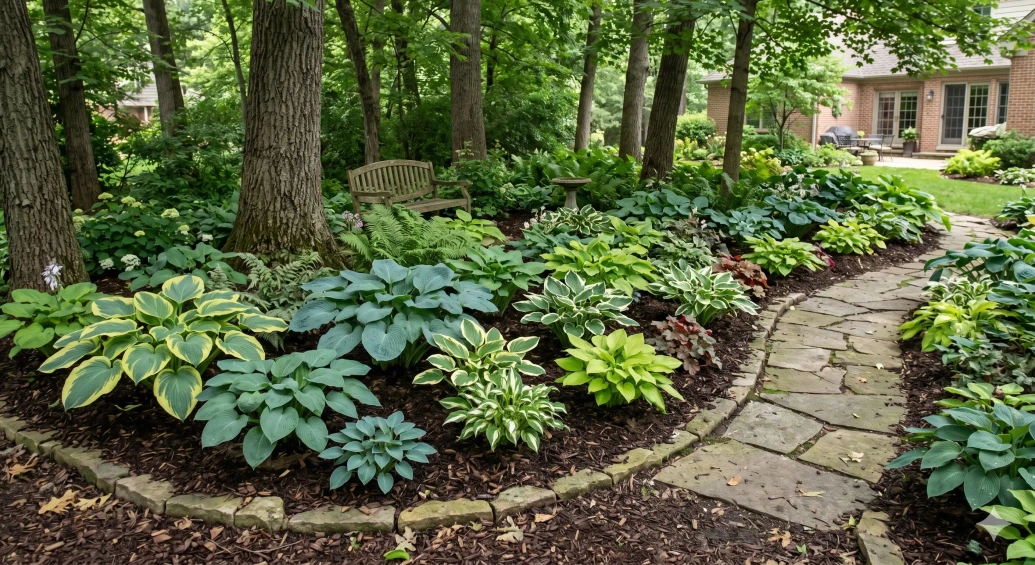
Most hostas are grown for their leaves, and that is exactly why they are so useful. In a shady border, flowers often come and go quickly, but hosta foliage holds the bed together for months. You can use them to edge a path, fill the space between shrubs, or tie together ferns, heucheras, hellebores, and other shade perennials.
They also come in a genuinely useful range of sizes. Small kinds may stay around 8 to 12 inches tall, while large ones can eventually spread 3 to 5 feet wide. Leaf color matters too. Blue hostas usually look best in deeper shade, while gold and chartreuse kinds can brighten a dim bed if they get a bit of soft morning sun.
Most also send up flower stalks in summer, usually in lavender, pale purple, or white. I do not think of them as the main event, but they do break up all that foliage and give the planting another season of interest.
Best hosta varieties for different garden situations
Not every hosta belongs in every spot. It helps to think about size, leaf thickness, color, and moisture before you buy, especially if you are planting a small yard where every plant has to earn its space.
Small hostas for edging and tight spaces
If you need something for the front of a bed or a narrow shady strip, compact varieties are easier to live with. They stay in scale, and they do not smother neighboring plants after a couple of good growing seasons.
‘Blue Mouse Ears’ is one of the best small hostas for edging. It forms a dense, rounded clump about 6 to 8 inches tall and around 12 inches wide, with thick blue-green leaves that hold up better than thinner ones. It is especially handy near stepping stones or along a path where a tidy shape helps.
‘Pandora’s Box’ is another solid option for a tight space. It usually stays under a foot tall, with green leaves and creamy white centers. The variegation shows more clearly in bright shade than in heavy, dark shade.
Medium hostas for mixed borders
Medium-sized hostas are often the easiest to place in a home garden. They are large enough to make an impact, but they usually still leave room for nearby ferns, astilbes, and other shade companions.
‘June’ is popular because it earns that reputation. It has blue-green margins and a gold center that often brightens with the amount of light it gets. Mature clumps are commonly around 18 inches tall and 30 to 36 inches wide, which makes it useful in the middle of a border.
‘Patriot’ has crisp white-edged leaves and a clean look that shows up well from across the yard. It works especially well beside dark evergreens or along a shady foundation planting where you want a little contrast.
‘Halcyon’ is a dependable choice if you want blue foliage that keeps its color reasonably well into summer. It usually makes a 14- to 18-inch mound and looks good with finer textures like painted ferns or Japanese forest grass.
Large hostas for anchoring a bed
Large hostas work best when you treat them like major shapes in the design, not spare fillers. Give them enough room and let them do that work.
‘Sum and Substance’ is one of the best-known large hostas, with chartreuse to golden leaves and a broad, upright habit. Mature plants can reach about 30 inches tall and 5 feet across in good conditions. It is a strong choice where you want one bold plant to hold the eye in bright shade.
‘Empress Wu’ is another giant, known for very large leaves and a commanding presence. It needs patience and real space, but in a roomy bed it can read almost like a shrub by midsummer.
‘Sagae’ is a large variegated hosta with blue-green leaves and yellow to cream margins. Its slightly vase-shaped habit gives it a more graceful outline than some of the rounder giant types.
Best picks by situation
If you want a shorter shopping list, these are the picks I would start with for common backyard situations:
- Best small hosta for edging: ‘Blue Mouse Ears’ — compact, neat, and less ragged-looking than many thin-leaved mini hostas.
- Best medium hosta for mixed beds: ‘June’ — useful size, strong color contrast, and easy to pair with ferns and heucheras.
- Best large hosta for a focal point: ‘Sum and Substance’ — bold leaf size and bright color that can carry a shady corner on its own.
- Best hosta for slug-prone gardens: ‘Halcyon’ — no hosta is slug-proof, but thicker blue leaves usually fare better than soft, thin ones.
- Best variegated hosta for bright shade: ‘Patriot’ — clear white margins that show up well without looking muddy.
Choosing hostas for shade gardens without crowding the bed
Spacing is where a lot of hosta plantings go wrong. A one-gallon nursery pot does not tell you much about what the plant will look like in three years, so people set them too close and end up dividing or moving them sooner than they expected.
A simple rule is to space by mature width, not by pot size:
- Small hostas: 12 to 18 inches apart
- Medium hostas: 24 to 36 inches apart
- Large hostas: 36 to 60 inches apart
If you want the bed to look full sooner, it is better to use a few temporary fillers than to crowd permanent plants. Overcrowded hostas trap more moisture around the crowns, make slug damage harder to spot, and lose the clean shape that makes each variety worth growing.
I’ve found that most beginners underestimate width more than height. A hosta that looks modest in its first season can push well into the next plant by year three if the soil is decent and moisture is steady.
What to know before you plant
Shade is not all the same, and hostas make that clear very quickly. Dry shade under a mature maple is much harder than moist shade on the east side of a house, even if both areas look cool and protected.
Most hostas prefer:
- Part shade to full shade
- Soil with organic matter
- Even moisture, especially in spring and early summer
- Good drainage, so the crown does not sit in soggy ground
Blue-leaved varieties usually keep their color better in deeper shade. Gold and yellow kinds often color up more nicely with some morning sun, but hot afternoon exposure can scorch the leaves, especially in warmer parts of the United States.
Tree competition is one of the biggest hidden problems. Fine roots from maples, oaks, and other mature trees pull water away fast, so a bed that feels cool can still be dry enough to stress hostas by midsummer.
In my experience, beds under shallow-rooted trees need compost and extra watering more than people expect. Shade helps with heat, but it does not solve the moisture problem.
Planting hostas the right way
Planting hostas is straightforward, but a few details help them settle in faster. Dig a hole wider than the root ball and loosen the surrounding soil so roots can spread outward instead of circling in one tight pocket.
Set the crown at the same level it was in the pot. If you bury it too deeply, growth can slow down and the crown can stay too damp. Backfill with the native soil, adding compost if your ground is poor, compacted, or low in organic matter.
Water deeply right after planting to settle the soil. A 2-inch layer of mulch helps hold moisture and keeps the bed looking finished, but keep mulch pulled back from the crown instead of mounding it against the plant.
Spring and early fall are both good planting times in many American gardens. Spring gives the plant a full growing season to root in, while early fall works well if the soil is still warm and you can stay on top of watering.
Care that keeps hostas looking good
Hostas are easy plants, but they still look better with a little regular attention. The main thing is steady moisture while the leaves are expanding and filling out in spring and early summer.
Water deeply when the soil starts drying a few inches down rather than sprinkling lightly every day. Leaves that look dull, thin, or slightly curled in summer often point to dry soil, especially in beds where tree roots are competing for the same water.
Fertilizer can stay simple. A light topdressing of compost in spring or a balanced slow-release fertilizer is usually enough. Too much feeding often gives you soft, lush growth that tears more easily and does not always look better.
Clean up old foliage after frost once it collapses. Leaving a wet mat of hosta leaves around the crown all winter tends to make spring cleanup messier and gives slugs more cover.
Common hosta problems and how to handle them
No plant is trouble-free, and hostas have a few recurring issues that are easier to manage if you expect them.
Slugs and snails
This is the classic hosta problem, especially on thin-leaved varieties. Ragged holes often show up in spring when fresh leaves are still tender. Thick-leaved kinds such as ‘Blue Mouse Ears’ and ‘Halcyon’ usually hold up better, but none are completely immune.
Use a few methods together: clear away soggy debris around the crowns, water earlier in the day, and trap or hand-pick when the problem is heavy. If slug damage is severe every year, switching to thicker-leaved varieties is often more effective than constantly trying to rescue badly chewed plants.
Deer damage
In many suburban yards, deer will eat hostas down almost overnight. If deer pressure is high where you live, it is better to plan for protection from the start instead of hoping the plants will be ignored.
Repellents can help, but they usually work best when used early and reapplied consistently. In the worst areas, fencing is more reliable than repeated spraying.
Scorch and faded color
Brown edges or washed-out leaves usually point to too much sun, too little moisture, or both. Blue hostas lose that cool, powdery look faster when they get stronger sun than they can handle.
A common issue I see is people blaming the variety when the real problem is reflected heat from a wall, driveway, or walkway. Even in a mostly shady yard, that extra heat can rough up the leaves by midsummer.
Design ideas that make hostas look intentional
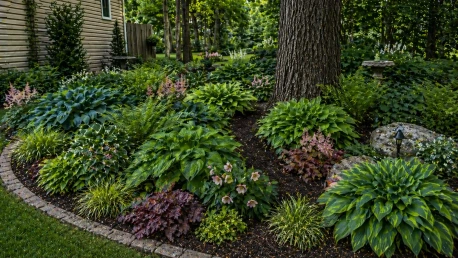
Hostas usually look best when they are paired with contrasting shapes and textures. A bed planted with nothing but medium green hostas can feel flat, even if every plant is healthy.
Try mixing:
- Broad-leaved hostas with ferns for texture contrast
- Blue hostas with chartreuse foliage for color contrast
- Large anchor varieties with smaller edging types for scale
- Hostas with spring plants like bleeding heart, then summer companions like astilbe or heuchera
One useful trick is letting hostas cover for plants that fade early. Bleeding heart often goes dormant in summer, so a neighboring hosta can fill that empty patch as the season moves on. Hellebores can do something similar earlier in the year, though their flowers face downward, so they usually look best where you can see them from slightly above.
Containers can work too, especially with small and medium varieties. Use a pot with good drainage, and remember that shaded containers often stay damp longer than sunny ones.
In my garden, containers in shade dry slower than many people expect, so I always check the soil before watering instead of doing it on a set schedule. That simple habit prevents a lot of yellowing and soft growth.
If you want more ideas for combining foliage, texture, and plant size in low-light spaces, ShadeAndGreen.com has more inspiration for shady beds and home-scale garden design.
Should you divide hostas?
Hostas do not need frequent division just to stay healthy. In fact, many look better once they have had time to build into a full, mature clump.
Divide them when they are getting crowded, when you want to make more plants, or when the center starts weakening. Early spring, just as the points begin to emerge, is one of the easiest times to do it. Early fall can also work well if the divisions have enough time to root before cold weather.
Make sure each division has several shoots and a good section of roots. Tiny pieces survive sometimes, but they take longer to look like anything in the garden.
Conclusion
The best hostas for shade gardens are the ones that fit your actual conditions and the size of your bed. Start with the right size, give them room to mature, and watch moisture, especially in dry shade under trees. Get those basics right, and hostas make a shady border look full and settled for years.