20 Best Plants for Shady Spots That Actually Thrive
A shady corner can look easy at first. It feels cool, the soil may stay dark, and the space seems protected from the hardest summer sun. Then the first round of plants stretches, fades, gets chewed by slugs, or dries out under tree roots. Choosing plants for shady spots gets much easier once you stop thinking of shade as one condition and start looking at the actual spot.
A north-facing foundation bed, a porch planter, a narrow side yard, and the soil under an old maple all ask for different plants. Some shaded areas are moist and rich. Others are dry within a day of watering because tree roots take most of the moisture.
This guide focuses on 20 dependable choices for real home gardens. Some are grown mostly for leaves, some for flowers, and some for structure. The goal is not to collect every possible shade plant, but to help you choose plants that are likely to settle in and look good without constant fuss.
Before choosing plants for shady spots, read the site first
Before buying anything, spend a few days noticing what the space actually does. Does it get morning sun? Does rain reach the soil, or does a roof overhang block it? Is the soil dry and dusty by midsummer? Do tree roots run through the bed like a net?
Shade usually falls into a few useful types:
- Bright shade: no harsh afternoon sun, but plenty of open light
- Part shade: a few hours of gentle sun, often in the morning
- Deep shade: little direct sun and limited reflected light
- Dry shade: low light plus root competition or blocked rainfall
- Moist shade: cool soil that holds steady moisture
In my experience, the most common mistake is planting for light only. A plant labeled for shade may still fail if the soil is too dry, too wet, or too crowded with roots. Moisture matters just as much as sun exposure.
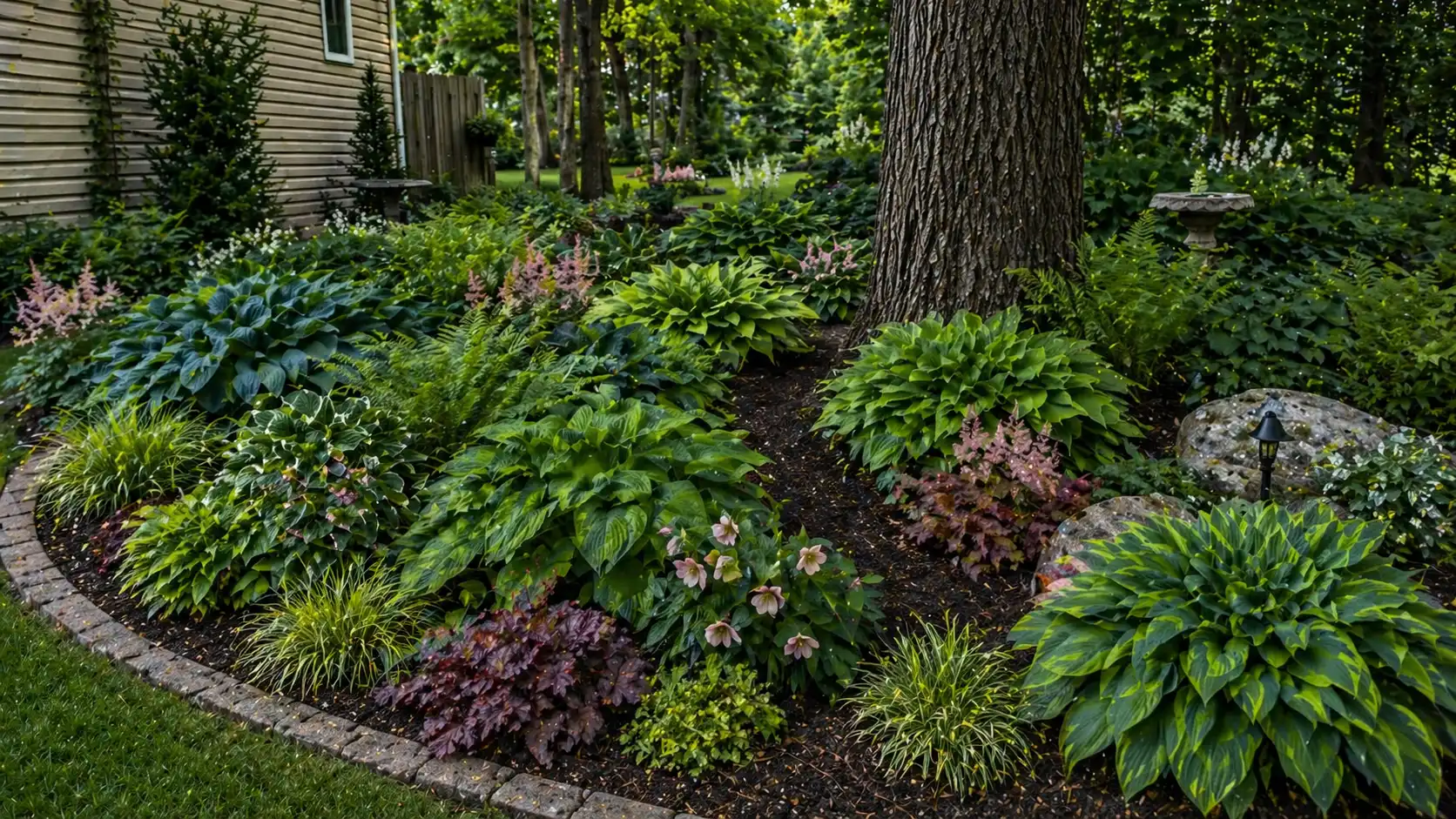
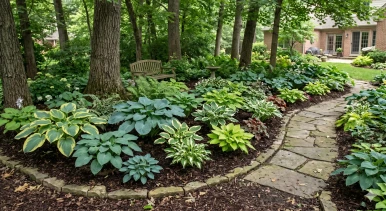
If you are unsure, start with a small group of tough plants and repeat them instead of buying one of everything. A repeated mix of hostas, ferns, heuchera, and carex usually looks calmer than a bed packed with unrelated plants.
20 plants for shady garden beds, borders, and containers
These plants are grouped by how they tend to work best in home gardens. Many can fit more than one category, but the notes below should help you place them with better judgment.
Foliage plants that give shade gardens structure
Shade gardens often rely more on leaves than flowers. That is not a weakness. Good foliage gives the bed shape from spring through fall, even when nothing is blooming.
1. Hostas
Hostas are classics because they are useful in so many shaded beds. Small kinds may stay under 12 inches tall, while large varieties can spread 4 to 5 feet wide over time. Blue hostas usually look best in deeper shade, while gold and chartreuse types often need brighter shade to show their color well.
The main warning is slug damage. Thin-leaved hostas can look ragged by early summer if slugs are active. If that happens in your garden, choose thicker-leaved types such as ‘Halcyon’ or ‘Blue Mouse Ears.’
2. Heuchera
Heuchera, often called coral bells, works well near the front of a shaded bed or in containers. Most form mounds about 10 to 18 inches tall, with leaves in burgundy, caramel, lime, silver, or green. They are helpful when you want color without relying on flowers.
Heuchera needs drainage more than many beginners expect. It dislikes sitting in soggy soil, especially in winter. In hot regions, give it afternoon shade so the leaves do not scorch.
3. Japanese painted fern
Japanese painted fern brings silver, green, and sometimes burgundy tones into shade without looking loud. It usually stays around 12 to 18 inches tall, which makes it useful near hostas, hellebores, and heuchera.
It prefers soil that stays evenly moist but not wet. In dry shade, it may survive, but the fronds often look thinner and tired by late summer.
4. Autumn fern
Autumn fern is a good choice when you want a fern with a bit more warmth in its color. New fronds often emerge coppery or bronze before settling into green. Mature plants commonly reach about 18 to 24 inches tall.
It works well along shaded paths or under shrubs where the soil has some organic matter. Give it water during dry spells while it establishes.
5. Carex
Carex, or sedge, is useful when you want a grassy look without trying to grow lawn grass in shade. Many types stay around 12 to 24 inches tall and form tidy clumps or slow-spreading patches.
Carex is especially good at softening bed edges and adding fine texture beside broad hosta leaves. Some types handle dry shade better than ferns, but they still look fuller with occasional deep watering.
Flowering plants for shade that are worth the space
Flowers in shade tend to be more seasonal than constant. The trick is to pick bloomers that add something useful, then let foliage carry the garden the rest of the time.
6. Hellebores
Hellebores are valuable because they bloom in late winter to early spring, when the garden is still quiet. Most form clumps around 18 inches tall and wide, with leathery evergreen or semi-evergreen leaves.
One placement tip matters: hellebore flowers often face downward. They show better on a slight slope, near steps, or beside a path where you can look into the blooms instead of over them.
7. Astilbe
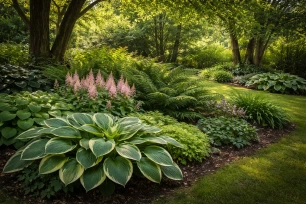
Astilbe is a strong choice for moist shade. It sends up feathery plumes in early to midsummer, usually in white, pink, red, or lavender tones. Depending on the variety, plants may grow from about 18 inches to 3 feet tall.
Astilbe is not a dry-shade plant. If the soil dries out, the leaf edges brown quickly and the plant looks stressed. Use it where moisture is steady, such as a cool border with compost-rich soil.
8. Bleeding heart
Old-fashioned bleeding heart is loved for its arching stems and heart-shaped spring flowers. It often grows 2 to 3 feet tall in spring, then may go dormant in summer, especially where heat arrives early.
That summer dormancy is not a failure, but you need to plan for it. Plant hostas, ferns, or heuchera nearby so the space does not look empty after the foliage fades.
9. Pulmonaria
Pulmonaria, also called lungwort, is useful in bright shade because it gives both spring flowers and spotted foliage. It usually stays low, often around 8 to 12 inches tall, and works nicely near the front of a bed.
It likes some moisture but does not want heavy, wet soil. In hot, dry sites, leaves may decline after spring unless the plant gets water and protection from harsh afternoon sun.
10. Foamflower
Foamflower, or Tiarella, is a gentle woodland-style plant with airy spring flower spikes and attractive leaves. It often stays around 8 to 12 inches tall, though flower stems can rise higher.
It works well in moist, humus-rich soil near ferns and hellebores. Some types spread slowly by runners, which can be useful as a ground layer in a natural-looking shade bed.
Tougher plants for dry shade
Dry shade is one of the hardest garden situations. The light is low, but the soil may also be dry because tree roots, roof overhangs, or dense shrubs take the moisture first.
11. Epimedium
Epimedium is one of the best plants for dry shade once it is established. It forms a low layer of heart-shaped leaves, often 8 to 18 inches tall, with delicate spring flowers on wiry stems.
It is not showy from across the yard, but it is steady and useful. I often think of epimedium as a quiet problem-solver for places where fussier perennials give up after one summer.
12. Liriope
Liriope is a tough, grass-like perennial that can handle part shade and some dry shade once rooted in. Many types grow about 12 to 18 inches tall and produce purple flower spikes in late summer.
It can spread, especially in mild climates, so place it where a dense edging or groundcover effect is welcome. Avoid using it in a small mixed border where delicate, slow-growing plants need room.
13. Bigroot geranium
Bigroot geranium, or Geranium macrorrhizum, is a durable perennial for dryish shade and part shade. It usually forms a low mat around 12 inches tall, with pink or magenta flowers in late spring.
The foliage has a distinct scent when brushed, which some gardeners like and others do not. It can spread into a useful groundcover, but it may be too assertive for a very small, carefully arranged bed.
14. Sweet woodruff
Sweet woodruff is a low groundcover with whorled leaves and small white spring flowers. It is often under 8 inches tall and can spread into a soft carpet in shade.
The downside is that it can move more than expected in loose, moist soil. Use it under shrubs, along a woodland edge, or in a place where a spreading groundcover is welcome. Avoid planting it right beside tiny perennials that could get covered.
Shade plants for damp corners and cool soil
If your shaded spot stays moist without becoming swampy, you have more options. These plants usually look best where the soil does not dry out hard in summer.
15. Ligularia
Ligularia has large, bold leaves and yellow flowers, often in spikes or daisy-like clusters depending on the type. Some kinds can reach 3 to 4 feet tall in bloom and spread 2 to 3 feet wide.
It needs steady moisture. If the leaves wilt every hot afternoon and do not recover by evening, the site is probably too dry or too exposed.
16. Rodgersia
Rodgersia is a big plant for a roomy, moist shade garden. It has large textured leaves and flower plumes in late spring to early summer. Mature clumps can reach roughly 3 to 5 feet tall and wide.
Use it as a backdrop or anchor, not as a front-edge plant. In a small bed, it can take over the view quickly.
17. Ostrich fern
Ostrich fern gives a lush, woodland look where it has space. It can grow 3 to 5 feet tall in good moisture and spreads by underground runners.
That spreading habit is both its strength and its warning. It is excellent for a large damp area, but too pushy for a narrow border or a tiny courtyard bed.
Shade-friendly plants for containers and small spaces
Containers in shade need plants that look good up close and do not rely on constant sun to stay colorful. They also need careful watering, because pots in shade often dry more slowly than expected.
18. Begonias
Begonias are reliable annuals for shady containers and porch planters. Wax begonias stay compact, while larger leaf forms can bring stronger texture and color. Many bloom from late spring into fall if they are kept evenly moist.
Avoid heavy, soggy potting mix. Begonias can rot if a shaded container stays wet for days.
19. Coleus
Coleus is grown for colorful foliage in bright shade and part shade. It can range from compact 12-inch plants to larger forms over 2 feet tall, depending on the variety.
Pinch the tips if plants get leggy. Coleus gives fast color, but it is tender and usually treated as an annual in most American gardens.
20. Caladium
Caladiums are warm-season foliage plants with bright leaves in white, pink, red, and green patterns. They are especially useful in porch pots and bright shade beds once the weather is warm.
They dislike cold soil, so do not rush them outside too early in spring. Caladiums often work best in containers where you can show off the leaf color up close and move the pot if nights turn chilly. In cooler climates, they may be slow to start until nights warm up.
In my garden, shaded containers often stay damp longer than I expect in spring and early fall. I check the soil with a finger before watering, because the top can look dry while the lower potting mix is still wet.
Quick guide: best picks by shady situation
| Shady situation | Good choices | Why they fit |
|---|
| Dry shade under trees | Epimedium, bigroot geranium, carex | Better tolerance for root competition and lower moisture |
| Moist shaded border | Astilbe, ligularia, rodgersia | Strong growth where soil stays evenly damp |
| Small front edge | Heuchera, pulmonaria, foamflower | Compact size and useful foliage |
| Slug-prone garden | Thick-leaved hostas, carex, hellebores | Less likely to look badly shredded than thin hostas |
| Shady containers | Begonias, coleus, caladiums | Good color in pots with limited direct sun |
Simple care tips for better shade gardening
Shade planting is usually easier when you start with soil and spacing instead of just plant names. Add compost where the soil is poor, but avoid piling it against tree trunks or plant crowns.
Water deeply while new plants establish. A quick surface sprinkle does not help much, especially under trees where roots are competing hard. Mulch can help hold moisture, but keep it a little away from crowns so plants do not sit in damp debris.
Spacing matters too. A young hosta, fern, or ligularia may look small in its first season, but many shade plants widen over time. Crowded beds are harder to weed, harder to water, and easier for slugs to hide in.
If you enjoy practical plant lists like this, ShadeAndGreen.com has more ideas for shade gardening, low-light plantings, and simple garden design for real home spaces.
Common mistakes to avoid
The first mistake is expecting heavy flowering in deep shade. Some plants bloom there, but most flower better in bright shade or part shade. In deep shade, good foliage usually gives a better result.
The second mistake is using moisture-loving plants in dry shade. Astilbe, ligularia, and many ferns may survive for a while under trees, but they usually look worn out if the soil dries repeatedly.
The third mistake is planting too many different things in one small bed. Shade gardens often look better with repetition: three heucheras along an edge, a drift of carex, or two matching hostas instead of a single plant of every variety.
Conclusion
The best plants for shady spots are the ones that match the actual site. Check the light, soil moisture, root competition, and mature size before planting. Once those basics are clear, a shaded bed or porch pot becomes much easier to plant well.